A half-day workshop at IEEE VR 2027, Melbourne. 27 or 28 February 2027, day to be confirmed.
SLEEP-XR
Shiftwork, long-duration exposure, and effects on performance in extended reality
Most XR studies are short sessions in a lab. People are starting to wear headsets for whole shifts. This workshop is about working out, together, how to study what happens to attention, fatigue and perception over hours, weeks and months.
This is a psychomotor vigilance task, or PVT. Everyone in the room does five during the workshop, and we look at the pooled results together at the end.
Call for papers
We want to understand how fatigue, sleep, shiftwork and long exposure change the way people perform in XR, and to agree on shared ways of measuring it so labs can pool data across sites.
What to send
Papers of 3–4 pages, excluding references: user studies, longitudinal or in-the-wild work, methods, case studies, reviews or position papers. Use the IEEE VGTC conference format and remove author details for review.
Accepted papers are published in the IEEE Digital Library. At least one author presents in Melbourne.
Submit a paper- Fatigue during prolonged XR use Physical, visual and cognitive fatigue across long and repeated sessions
- Sustained attention and cognitive performance Reaction time, workload and decision-making over extended use, including the PVT
- Sleep, shiftwork and circadian factors Sleep loss, irregular hours and time of day
- Perception and sensory adaptation Visual and depth perception, spatial awareness and adaptation to immersion
- Embodied interaction and physical performance Movement, posture, coordination and ergonomics over time
- Cybersickness, wellbeing and safety Cumulative discomfort and how it relates to fatigue and performance
- Longitudinal and in-the-wild methods Study designs that go beyond a single lab session
- Shared research infrastructure Common protocols, shared datasets and multi-site studies
Dates
- Papers due 7 Dec 2026 Monday
- Notification 7 Jan 2027 Thursday
- Camera-ready 12 Jan 2027 Tuesday
- Workshop 27 or 28 Feb 2027 Day to be confirmed, Melbourne
Deadlines close at 23:59 anywhere on Earth (AoE).
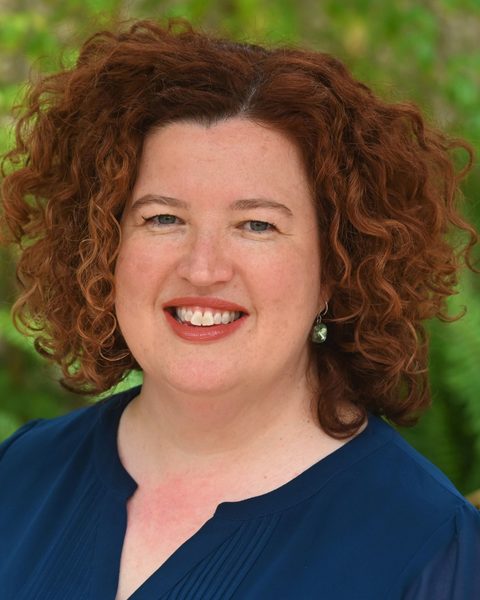
Keynote speaker
Professor Siobhan Banks
Professor of Psychology and Director of the Behaviour–Brain–Body Research Centre, Adelaide University
Professor Siobhan Banks is a Professor of Psychology at Adelaide University and Director of the Behaviour–Brain–Body Research Centre. Her research explores how biology, behaviour and technology interact to shape health, individual and team performance, and decision-making in demanding environments. With expertise in circadian rhythms and fatigue, she investigates how people respond to sleep loss, irregular work schedules and sustained operational demands.
Her work combines laboratory experiments, extended operational simulations and field research to develop practical strategies that support people working in healthcare, transport, defence and aerospace. Her research also examines wearable monitoring, human–technology interaction and human–autonomy teaming, with an emphasis on designing systems that accommodate changes in human performance over time.
Professor Banks has secured more than $20 million in research funding and has a strong commitment to industry collaboration and postgraduate research training. She received the 2019 Australian Council of Graduate Research Award for Excellence in Promoting Industry Engagement in Graduate Research and was a finalist in the 2021 Australian Defence Magazine Women in Defence Awards.
Program
A morning that's mostly hands-on. The red marks are the five PVTs, spaced through the session so we can see attention change as the morning goes on.
- 09:50 Keynote: Professor Siobhan Banks
- 10:25 Propose and dot-vote on experimental tasks
- 11:25 Lightning talks from accepted papers
- 12:10 The protocol revealed, and forming research groups
- 12:45 Looking at the room's PVT data together
Organisers
- Neven ElSayedAdelaide University
- James BaumeisterAdelaide University
- Ernst KruijffHochschule Bonn-Rhein-Sieg
Program committee
- Adam Drogemuller, Flinders University
- Linda Grosser, Adelaide University
- Benjamin Volmer, Adelaide University
- Crystal Yates, Adelaide University
- Ammaar Zammaan, Know Center Research GmbH